Beyond the Policy Patchwork: Documenting Generative AI Use in UK Assessed Work
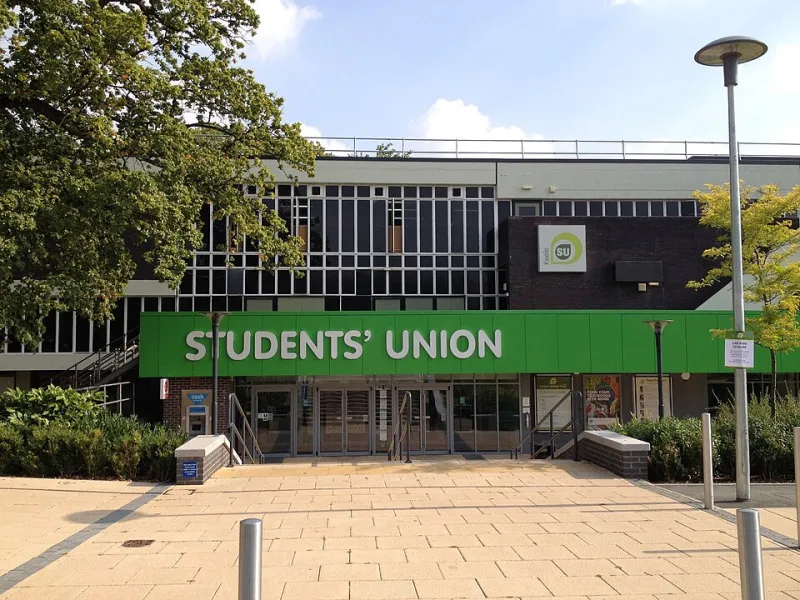
Photo: Jonathan Hutchins, CC BY-SA 2.0, via Wikimedia Commons
Why the policy patchwork persists
UK universities have not adopted a single, sector-wide rule on generative AI in assessed work. In 2026, students therefore meet a patchwork of positions: some departments permit AI for brainstorming and proofreading with a declaration; others restrict it to specific tasks; others prohibit generated text entirely. The variation is not evidence that anything is permitted. It means the assessment brief, module handbook and faculty academic integrity policy are the governing documents for each task.
Sector guidance from bodies such as the Quality Assurance Agency has encouraged institutions to be explicit, but implementation remains local. A policy that applies in one module may not apply in another, and a practice accepted in formative work may be unacceptable in summative assessment. The first defensive step is therefore documentary: identify the exact rule that applies to the piece of work in front of you, not the general mood of the department.
Separate the three uses of AI
Most confusion arises because the phrase generative AI covers very different activities. Students should distinguish between research support, editing and text generation.
Research support includes using AI to suggest search terms, identify possible themes or explain a concept. Editing includes asking a tool to comment on clarity, structure or grammar. Text generation includes asking AI to draft sentences, paragraphs or sections that are then submitted. Universities often treat these categories differently. A department may allow the first, tolerate the second with disclosure, and prohibit the third.
A defensible practice begins by naming which category applies. If the permitted use is proofreading, do not use the tool to rewrite paragraphs. If the permitted use is brainstorming, do not paste generated prose into the final document. The boundary matters because markers and academic integrity officers assess conduct against the stated permission, not against the student's intention.
What a disclosure statement should contain
Disclosure requirements vary, but common elements recur. A useful declaration records the tool and version used, the date or stage of use, the purpose of use, the extent of use, and what was done with the output. For example, a student might state that a generative AI tool was used on a specified date to suggest alternative headings for a literature review, that no generated text was submitted, and that all sources were checked independently.
A vague statement such as AI was used for editing is rarely sufficient. It does not tell the marker whether the student used the tool to correct commas or to rewrite the argument. A precise statement is more defensible because it can be checked against the assessment rules and against the version history of the work.
Students should also retain a simple AI use log. This need not be elaborate. A table with columns for date, tool, prompt or purpose, output retained, and changes made is enough. The log should be kept until the assessment is finalised and any appeals period has passed. Memory is not a reliable record, and reconstructing use after a query is far harder than documenting it at the time.
Protect authorship, not just compliance
The deeper issue is authorship. Even where AI use is permitted, the final argument, source selection, interpretation and conclusions must remain the student's own. Generative tools can produce fluent prose that sounds authoritative while misrepresenting sources or inventing references. A submission that relies on such prose may satisfy a disclosure requirement yet fail on accuracy and originality.
Students should therefore verify every citation against the original source, read the material they cite, and ensure that the analytical claims in the essay can be explained without reference to a generated output. If a sentence cannot be defended in a seminar or supervision meeting, it is not safe to submit. Keeping drafts and notes also helps demonstrate the development of the argument.
A practical workflow for uncertain cases
When the rule is unclear, the safest sequence is to ask before acting. Module leaders and academic integrity officers can clarify whether a particular use is permitted. The question should be specific: may a generative AI tool be used to suggest keywords for a literature search, and what declaration is required? A specific question produces a specific answer.
If permission is granted, record it. If permission is refused, do not use the tool for that task. If the policy changes during the module, follow the version in force at the time of submission. And if AI has been used in error, disclose it early rather than waiting for a query. Early disclosure is usually treated as a matter of honesty; concealment is treated as a separate problem.
Conclusion
The AI disclosure dilemma is not solved by finding a universal rule, because no universal rule exists. It is managed by reading the local policy, separating different uses of AI, documenting those uses precisely, and keeping the intellectual work in the student's own hands. In a sector still building its standards, defensibility comes from transparency and evidence, not from guessing what an institution might tolerate.